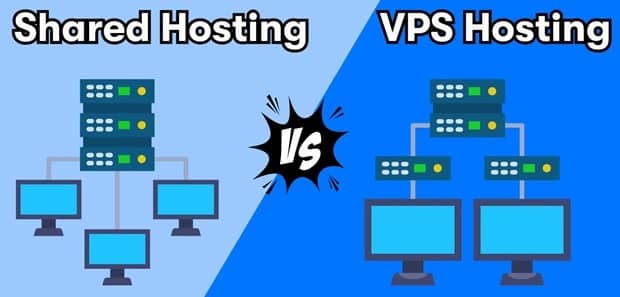
One of the toughest decisions that website owners have to make is between VPS hosting and shared hosting plans. Understanding the differences between hosting types allows you to make an informed decision based on your need for control and scalability. Shared hosting means your site lives on a server with other sites and utilizes its memory and processing power.
With VPS hosting, a partition is created so you have user control over your own space with more generous resources. Learn more about each of these hosting types below so you can make intelligent decisions about your hosting needs. You’ll ensure that your site operates efficiently today and is prepared for tomorrow.
Speed and Performance: VPS Versus Shared Hosting
Every website owner wants their site to load quickly and perform well under pressure. When your site shares space and processing power with others on shared hosting, your site’s performance is degraded. With virtualized space and dedicated resources, your site will load faster and have consistent uptime with VPS hosting.
This means that when traffic spikes to your site, your visitors will have a positive experience. Satisfied users will return to your site more often and engage more while they’re there. If speed and performance are important to you, VPS hosting will likely serve you better.
Resource Sharing: Understanding the Difference
All sites utilizing shared hosting split server resources equally. When one site demands more resources than another, performance can suffer. By providing dedicated resources to your site, your performance will remain stable and optimal. If your site expects to regularly handle high traffic loads, VPS hosting may be right for you.
Expandability: How Can You Grow With Your Host?

It’s difficult to scale up on shared hosting since you can’t generally add additional space. You’ll have to upgrade your plan which can take time and resources. With Virtual Private Server hosting, you can increase your resources as your site grows.
This allows you to grow your visitor base without experiencing slow-downs. Planning for expansion is crucial to your success. Your hosting should allow you to expand as your website grows.
Isolation and Security: Keeping Your Site Safe
Security should be every website owner’s top priority. On shared hosting, multiple sites on the same server means vulnerabilities can affect you as well. VPS hosting provides your site its own space on the server so other sites can’t jeopardize your security.
Your website and your customer’s data will be safer as a result. Your website will live in a more secure environment with VPS hosting. If you handle sensitive data, VPS hosting may be right for you.
Cost: Will You Stay Within Budget?
Shared hosting is inexpensive which is why it’s great for those just starting out or with smaller sites. Virtual Private Server hosting costs more but allows you more bang for your buck. You’ll have access to more powerful features and greater control over your site.
While you may pay more initially, you’ll receive greater value from your hosting service. Every business and website needs to stay within their budget. Consider how much you can spend and what features you’ll need. You may find that spending a little more now can save you money in the future.
User Control: Hands-On with Your Site
When you opt for shared hosting, you won’t have full control over your hosting environment. You must adhere to the configurations set forth by your hosting provider. This limits your ability to customize your hosting experience.
VPS hosting allows you to tailor your hosting environment to your specific needs. This is ideal for those who have a strong knowledge of programming. The more control you have, the more you can optimize your website for success. Take control of your hosting environment with VPS hosting.
User Friendliness: What You Need to Know to Manage Your Site
Shared hosting is designed to be user friendly for those who are new to running websites. Shared hosting companies typically provide a user interface so you can easily manage your site. To utilize VPS hosting, you’ll need to become acquainted with the backend. You may be required to configure your server and maintain it yourself. Ease of use is something to consider when making your decision. Shared hosting is great for beginners, but allow more freedom if you have experience.
Uptime: Shared hosting plans go down when the server is over-utilized or another site on the server is affected. Since each site on VPS hosting doesn’t share resources, your site is more reliable.
Your hosting service will have less downtime and you’ll experience fewer interruptions. Users expect your website to be available at all times. Choose a hosting plan that will provide maximum uptime.
When to Use Each Type of Hosting
Use shared hosting when your website is small. This is ideal for blogs or if you’re just starting out. VPS hosting is great when your website or application needs room to grow. Your hosting should suit what you want to do with your site. Now that you know when to use shared hosting and VPS hosting.
Upgradeability: Moving to VPS hosting can take up some of your time and technical expertise. Since VPS hosting is similar to shared hosting, upgrading is simple and can be done in a similar environment.
Your website won’t have to experience major down time and you can continue to grow with your hosting service.